
Case Study
How a Corporate Executive Became a Founder and Exited in 2.5 Years
The FairNow Story: From Corporate Career to Bootstrapped Exit at 50x ARR
By Somen Mondal, Co-Founder, T10 Ventures
Founder Conversation
25 minutes with Somen, Shaun & Guru
Hear the full story directly from the founders — the leap, the lessons, and what it’s really like to go from corporate executive to startup exit.
Chapter 1
The Problem We Saw
In 2022, AI was moving from a nice-to-have to a mission-critical function inside every enterprise. But here’s the thing nobody was talking about: the faster companies adopted AI, the more exposed they were. New regulations were coming from every direction. NYC’s Local Law 144 was forcing bias audits on hiring algorithms. The EU AI Act was introducing risk classifications for AI systems. Frameworks like NIST AI RMF and ISO 42001 were giving compliance teams entirely new standards to meet.
The problem? There was no purpose-built software to manage any of it. Enterprises were tracking AI governance in spreadsheets, if they were tracking it at all. Compliance teams were drowning in manual processes while their organisations were deploying AI systems faster than anyone could audit them.
Shaun and I saw this firsthand. We had just come off building and selling Ideal, our second company together, which was an AI-powered talent intelligence platform. We were working at the acquirer, Dayforce, and we could see the regulatory wave building. We knew AI governance was going to be a massive market. But we couldn’t build it ourselves. We were working at Dayforce full-time. So we did something different. We went looking for the right founder.
Chapter 2
What We Built
Finding the founder
Finding Guru Sethupathy was part luck, part pattern recognition. A mutual connection, Pete Bergen, made the introduction in the fall of 2022. Our first call was right around Labour Day. Within three months, we knew this was the right partnership.
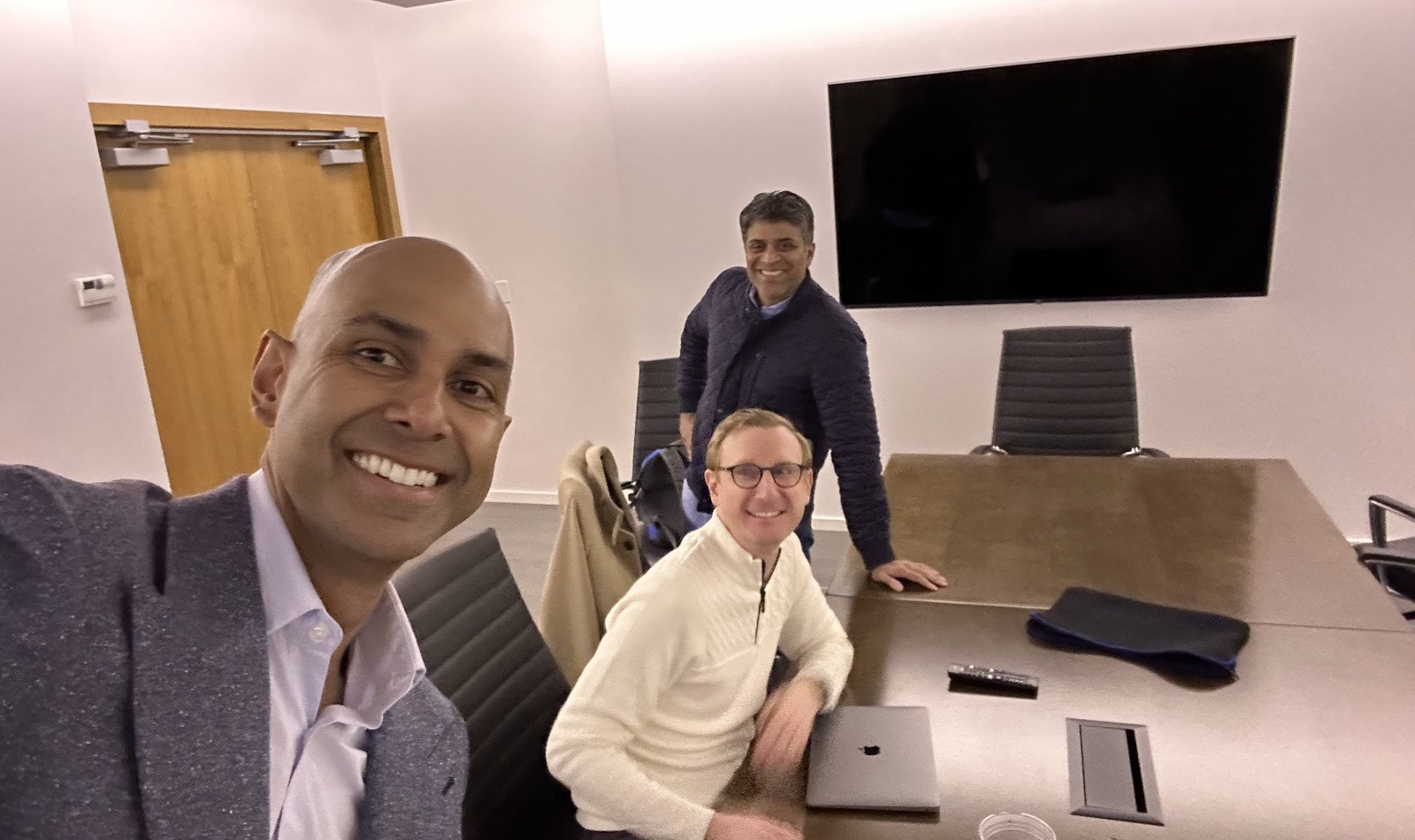
Was it obvious from day one? Not exactly. But a couple of things stood out. Guru had spent six years at Capital One, first as VP leading people strategy, analytics, and data (where he built and led a team of 100+ across data science, engineering, and talent strategy), then as Managing VP running AI innovation and AI risk management. He wasn’t just academically smart. He had been the buyer of this kind of technology inside a Fortune 500. He understood procurement cycles, enterprise sales, and the pain of managing AI risk at scale. When you’ve spent that long as the buyer, you know exactly what to build when you become the seller. That combination is incredibly rare.
When you’ve spent that long as the buyer, you know exactly what to build when you become the seller.
Here’s the other thing: he could sell. We didn’t fully know that yet, but we got a preview during our equity negotiations. He pushed back. He got himself a good deal. If you can negotiate hard for yourself, you can negotiate hard for your company. That’s a signal.
The leap
What happened next is the part that most people in corporate careers will recognise. Guru had been close to leaving Capital One once before, in 2021. They kept him. Created a custom role, gave him the freedom to build whatever he wanted. That’s hard to walk away from. Then, in the summer of 2022, a close colleague he’d stayed to work with passed away suddenly. Young, fit, no warning.
Sometimes it takes something like that to force the question you’ve been avoiding. Guru made his decision by late 2022. He left. Not on the side, not while keeping his day job as a safety net. All in.
If you have a bridge back to your old life, you’re not going to put in the energy to make the new thing work. You have to have zero options.
Everyone told him not to do it. Friends, family, mentors. Why would you walk away from that salary, that title, that security? Most people never make that jump. Guru did. We funded the initial seed ourselves, and he got to work.
The product
FairNow became an end-to-end AI governance platform. At its core, it gave enterprises a centralised AI registry, automated compliance workflows mapped to 25+ global regulations and frameworks, dynamic risk assessments, and bias audit capabilities. It served both builders of AI (who needed to demonstrate their systems were responsible) and buyers of AI (who needed to evaluate vendor systems for compliance). Customers included Dayforce, Johnson & Johnson, Cielo, Humanly, Ashby, and others across HR tech and financial services.
The team never exceeded 10 people. AI-native from the start. A lean team doing the work of a company ten times its size without venture capital. That’s not a slogan. It’s how the company actually operated.
Chapter 3
What We Learned
Experienced founders win
I think there’s a common misconception that you have to be a 20-year-old right out of school to start a business. The data says otherwise. Research shows that founders who start companies in their 40s, conditional on starting, actually have better outcomes than founders in their 20s. More experience, deeper networks, better judgment. Less ego, more execution.
Guru is a perfect data point. His decade-plus in corporate wasn’t wasted time. It was his competitive advantage. He knew the buyer’s pain because he had been the buyer. He knew what procurement looked like because he’d sat on procurement committees. He knew enterprise sales cycles were long because he’d been on the other side of them. That domain expertise compressed years of trial and error into months.
If you’ve built deep domain expertise in an industry and you’ve been thinking about starting something, that experience isn’t a liability. It’s the single most valuable thing you bring to the table.
Distribution over product
The biggest operational lesson we brought to FairNow, one we learned building Ideal, is that first-time founders focus on product, second-time founders focus on distribution.
Guru will be the first to tell you he came into this as a product guy. Brilliant technician, deep domain expertise, great instincts for what to build. But in the early days, Shaun and I were constantly saying the same thing: it doesn’t matter how good the product is if nobody knows about it. Let’s go sell this thing.
To his credit, Guru absorbed that. He invested heavily in partnerships throughout 2024 and into 2025. OEM relationships, marketplace integrations, distribution deals. The magic of any startup is getting a larger company to literally sell your product for you. We’ve always believed that’s the key to building a business, and we pushed that hard.
Would we do anything differently? We’d move even faster on distribution from day one. The velocity of the partnership conversations in the final year is what ultimately created the conditions for the acquisition. Earlier investment there would have accelerated the whole timeline.
Chapter 4
The Acquisition
In 2025, Guru was deep in partnership discussions with AuditBoard, the leading AI-powered platform for audit, risk, and compliance. The plan was an OEM distribution deal. AuditBoard would embed FairNow’s AI governance capabilities into their Connected Risk Platform and sell it through their existing enterprise customer base.
They were on track to announce the partnership at AuditBoard’s annual Audit & Beyond conference in October 2025. And then the conversation shifted. What started as a partnership flipped to an acquisition in three weeks. Literally. Mid-September, they were still talking distribution deal. By late October, it was a signed acquisition.
When you build a solid business with great fundamentals — strong revenue growth, great product, lean team, clear path to profitability — you create options. The partnership was the goal. The acquisition was the outcome.
I remember Guru telling us he was actually nervous about going down the acquisition path. Not because he didn’t want it, but because he’d been through a similar process the year before that didn’t work out. His worry was that pursuing the acquisition might kill the partnership too. He just wanted the partnership. That would have been transformative enough for the business.
On October 22, 2025, AuditBoard announced the acquisition of FairNow. Two and a half years from founding. 50x ARR. No venture capital beyond the seed. The acquirer’s CEO said integrating FairNow would deliver the most comprehensive AI governance solution on the market. Their own research had found that fewer than 30% of enterprise leaders felt prepared for upcoming AI governance requirements. FairNow was the answer to that gap.
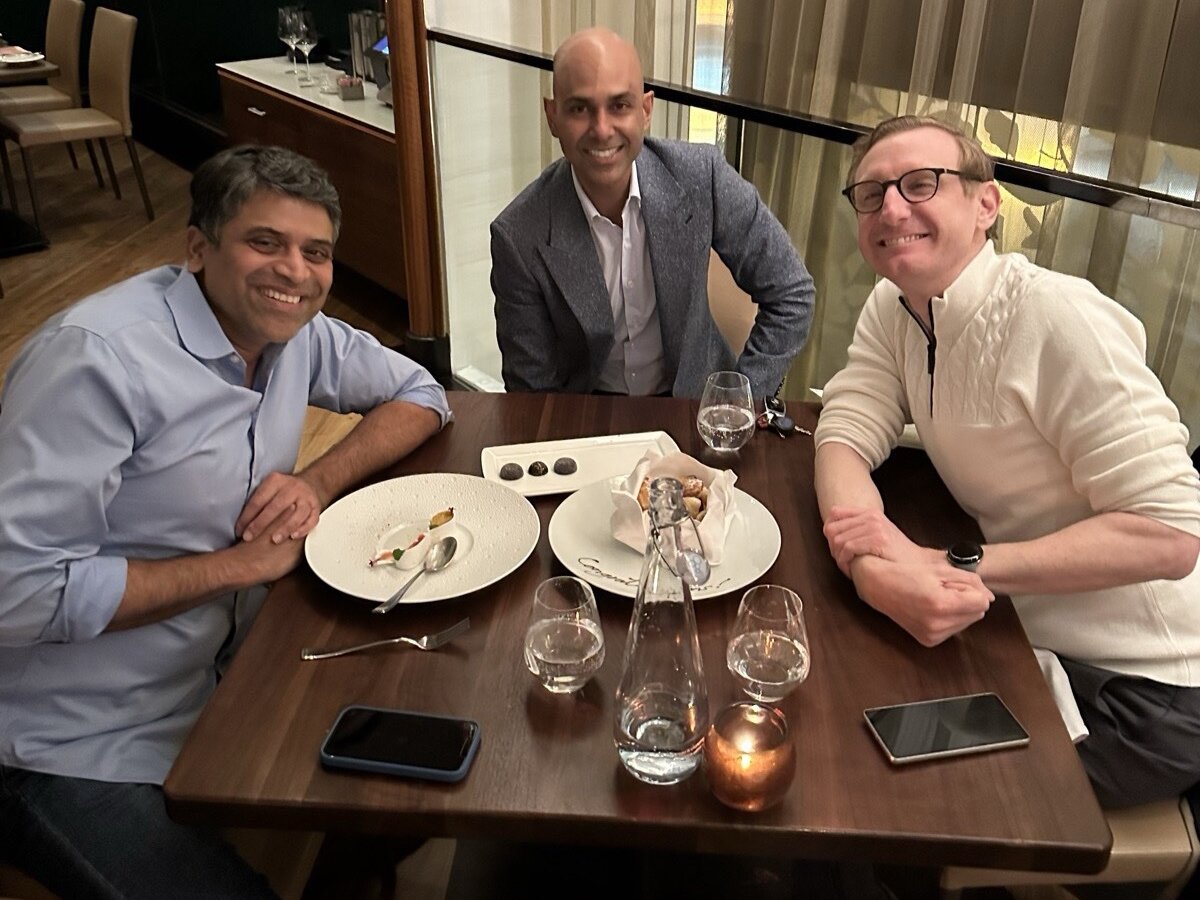
For Guru, it was life-changing. He went from a corporate career to a founder exit that put him in a fundamentally different financial position. He walked into entrepreneurship thinking the expected outcome was zero. He just wanted the experience. For Shaun and me, the financial outcome was great. But I’ll be direct: watching Guru succeed was the most rewarding part. Getting to know him as a friend over three and a half years, going through the tough conversations and the wins together. That’s what drives us to keep doing this.
Chapter 5
Bridge to Amp
FairNow wasn’t just a win. It was proof of concept for the T10 thesis. We believe the best new startups don’t look like the last generation. They’re AI-native. Tiny teams automating every internal function, reaching meaningful revenue with 5 to 12 people instead of 200. They’re 10x leaner, 10x faster to value, and 10x more acquirable. Strategic buyers don’t need another system of record. They need AI-native capabilities that plug into their stack. That’s exactly what FairNow was to AuditBoard.
FairNow proved that building an AI-native company doesn’t require a lot of people to scale sales. It proved that domain expertise plus the right playbook can compress a decade-long journey into under three years. And it proved that strategic exits, not billion-dollar unicorn valuations, are the most reliable path to life-changing outcomes for founders.
Now we’re applying those same lessons to Amp, our next venture in the world of HR and talent technology. Two things carry forward directly from FairNow. First, AI governance is critical when you’re building mission-critical systems, especially ones that work with HR and talent data. That’s not theoretical for us. We built the governance platform. We understand that layer intimately. Second, the playbook works. Find a domain expert. Fund the venture. Build lean and AI-native. Focus on distribution from day one. Design for strategic acquisition.
Three ventures built, three sold. That’s the track record. And we’re just getting started.
Ready to build your 10x venture?
If you have deep domain expertise and you can’t stop thinking about building something, reach out. No pitch deck needed.